Walk into almost any sari-sari store, wet market stall, or even a street food cart in Metro Manila today, and you’ll probably hear it:
“Pwede QR PH?”
What used to be a rare sight—cashless payments on a tiny printed QR code taped beside a cash box—is now becoming the norm. And honestly, it’s a little surreal if you’ve grown up counting coins for every ₱10 purchase.
But here’s the real question: Are we slowly witnessing the end of physical cash in the Philippines?
At a Glance: What QR PH Really Is
National QR standard by BSP
Cashless payments via QR code
GCash, Maya, bank apps
Unified cashless ecosystem
The Quiet Revolution Happening in Your Neighborhood
What makes QR PH interesting is not just the technology—it’s how quietly it slipped into everyday Filipino life.
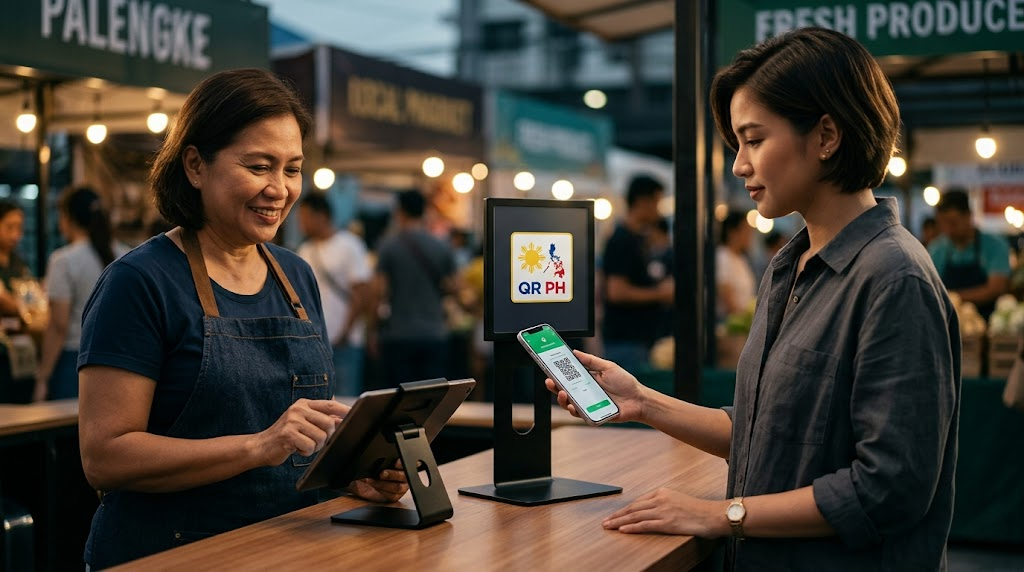
One day you’re paying cash for your taho, and the next day the vendor is pointing to a laminated QR code saying, “Sir, scan na lang po.” No big announcement. No dramatic transition. Just… evolution.
Even small karinderyas and palengke stalls now prefer QR payments—not because it’s trendy, but because it reduces cash handling stress and theft risks.
Why QR PH Took Off in the Philippines
1. Convenience
No need for exact change. Just scan and go.
2. Mobile-first lifestyle
Almost everyone already has GCash or Maya installed.
3. Pandemic acceleration
Contactless payments became a safety necessity.
But here’s the catch… it wasn’t just technology pushing this forward. It was behavior. Filipinos adapted faster than expected because QR payments solved very real, everyday problems.
Where QR PH Is Winning (Big Time)
🛒 Sari-Sari Stores
Even ₱5 transactions are now cashless in some areas. Owners like it because they don’t need to break bills.
🚌 Transport & Commuting
Some jeepney routes and tricycle operators are slowly adopting QR payments for convenience.
🍔 Food Delivery & Street Food
From burger stands to milk tea carts—QR PH is becoming standard.
Quick Reality Check: Is Cash Really Dying?
Cash Usage Still Strong
Still widely used in rural areas and daily micro-transactions
QR PH Adoption
Rapidly growing, especially in urban and semi-urban areas
So no, cash is not dead. Not even close. But it is definitely sharing space now—and that’s the real shift.
Real-World Experience: Using QR PH Daily
Paying with QR PH in daily life feels like a mix of convenience and occasional awkwardness.
- Some stalls still don’t know how to confirm payments instantly
- Internet signal can ruin a smooth checkout moment
- Older vendors sometimes still prefer cash “just in case”
But when it works? It’s fast, clean, and surprisingly addictive. You start forgetting how many coins you used to carry around.
Pros and Cons of QR PH Adoption
✔ Pros
- Faster transactions
- Less need for cash handling
- Safer from theft
- Easy for small businesses
✖ Cons
- Internet dependency
- Occasional transaction delays
- Not all vendors are ready
- Still excludes some cash-only users
So, Is QR PH Replacing Cash?
Not really replacing—more like coexisting and slowly reshaping behavior.
In Metro Manila, QR PH feels like the future already arrived. But outside urban areas, cash is still king.
The real story here isn’t “cash vs QR”—it’s how Filipinos are adapting to a hybrid payment lifestyle.
Should You Fully Switch to Cashless?
Short answer: Not yet.
The smartest approach right now is balance. Use QR PH when available, but always keep some cash for areas with limited digital infrastructure.
FAQ
Is QR PH safe to use?
Yes, it’s regulated by the Bangko Sentral ng Pilipinas and widely used by major financial apps.
Can small businesses use QR PH?
Absolutely. In fact, many sari-sari stores and vendors now rely on it daily.
Do I need internet to pay via QR PH?
Yes, a stable mobile data or WiFi connection is required for transactions.
Will cash disappear in the Philippines?
Unlikely in the near future. Cash and digital payments will continue to coexist.
Final Thoughts
QR PH isn’t just a payment system—it’s a cultural shift happening in real time.
It’s changing how we think about money, convenience, and even trust in everyday transactions.
And while it won’t kill cash anytime soon, it’s definitely rewriting how we use it.
Ready to Experience Cashless Living?
Disclaimer: Images used in this article are for illustrative purposes only. All photos belong to their respective owners. If you are the copyright holder of any image and wish to request removal or credit update, please contact us.